

O coaching como negócio da fragilidade alheia
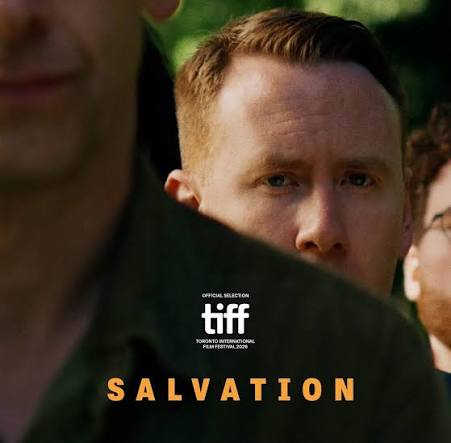
Não gosto da ideia por trás dos life coaches. A maioria não tem formação acadêmica para exercer a função de mentoria ou preparação de outras pessoas, enquanto alguns sequer parecem possuir a capacidade de cuidar da própria vida, que dirá da vida alheia. Há, assim, um elemento de Salvation, a estreia do britânico Tom Nicoll na direção de longas-metragens, com o qual me identifico imediatamente, e que inevitavelmente enviesou meu olhar desfavoravelmente em relação a Danny (Liam Harkins), que investe dinheiro que não possui, a maioria dos outros, para montar o negócio de life coaching que imagina ser capaz de conduzir. Porém, o filme tem uma preocupação mais ampla do que transformar Danny em um charlatão. Nicoll parte dele para observar uma sociedade em que estruturas coletivas se enfraqueceram, o indivíduo foi colocado no centro de tudo e a procura por sentido passou a ser também uma oportunidade comercial, em um mundo em que todos buscam sentido e significado.
Danny é apresentado como um homem de trinta e tantos anos, morando com a mãe e tomando dinheiro emprestado de conhecidos, enquanto alimenta a sensação de que nasceu para algo maior. Quando conhece Marshall (O’Loughlin), um life coach que o convence a entrar na profissão, Danny toma empréstimos para criar um site, pagar anúncios e começar a vender uma promessa de transformação, a balela de se tornar a sua melhor versão, algo que ele próprio ainda não alcançou. A única pessoa que realmente compra seu discurso é Scott (McMillan), um homem emocionalmente vulnerável, com problemas familiares severos, especialmente na relação com o pai. A partir desse encontro, o filme estabelece uma relação em que a intimidade e cumplicidade é o subterfúgio da exploração e predação.
É importante entender que o diretor não condena Danny simplesmente porque ele escolheu uma profissão em que não acredita, nem procura transformar o personagem em um vilão tradicional. Nicoll não pede que admiremos Danny, mas tenta entender o mecanismo que o levou até aquela situação. Não há julgamentos morais, mas o retrato da falência individual e do impacto disso ao seu redor. Isso é interessante especialmente porque, em um mundo em transformação, é perfeitamente legítimo que homens precisem se reorganizar para compreender qual é o seu papel na sociedade contemporânea não centrada na figura do homem hétero branco. O problema está em como isso acontece, algo que Clube da Luta anunciou há quase três décadas. Essa reunião de homens poderia envolver autocrítica, responsabilidade ou compreensão de novas formas de convivência, e não um coaching de alta performance que acrescenta pregação e discurso motivacional ao ressentimento masculino diante da descoberta de que o mundo não gira mais em torno de seu umbigo.
Marshall e, depois, Danny vendem respostas rápidas em uma sociedade que parece incapaz de oferecê-las por outros caminhos, ou em refletir meios eficazes de aprimoramento individual e coletivo. Danny não precisa ser inteligente nem competente, e verdadeiramente não é, para convencer alguém como Scott; basta reconhecer a fragilidade do outro e transformar essa fragilidade em oportunidade. O life coaching, nesse sentido, passa a se aproximar de uma estrutura de marketing de rede, em que a sobrevivência depende da procura contínua de alguém abaixo de você na cadeia “alimentar” para financiar a promessa ilusória de sucesso. Essa lógica transforma o que é vulnerabilidade emocional em uma matéria-prima do capitalismo tardio. Scott é um exemplo quase perfeito disso: um homem confuso, marcado por transtornos e por uma relação difícil com o pai, o tipo de pessoa que deveria ser encaminhada a um profissional treinado – um terapeuta ou um psiquiatra -, mas que encontra em Danny alguém disposto a ocupar esse lugar sem possuir preparo para fazê-lo.
A ironia é que Danny começa acreditando, ou pelo menos fingindo acreditar, que está ajudando Scott. Existe inicialmente uma relação afetiva entre os dois, e isso torna sua deterioração posterior mais incômoda. Liam Harkins, que está em todas as cenas do filme, apesar de seus atos, é também uma vítima desse mesmo sistema, agudizado pela tecnologia e explorado através das redes sociais. Danny não é um homem que escolheu fazer o mal, mas alguém que, pressionado pelo elemento monetário, que permeia a sociedade capitalista, é obrigado a improvisar soluções cada vez mais extremas.
Formalmente, Nicoll encontra uma maneira precisa de implicar o espectador nessa subjetividade. Tanto a razão de aspecto (o tamanho da tela) comprime o espaço, dificultando a possibilidade de fuga, quanto os closes de Danny e os movimentos de câmera que avançam em sua direção produzem uma sensação de pressão implacável. Tudo parece implicá-lo, pressioná-lo, colocá-lo diante de nós à medida que as cobranças se avolumam. Nicoll mostra Danny no centro da história porque é como o protagonista provavelmente se enxerga, já que é incapaz de enxergar além dele mesmo. Se puder ajudar outros enquanto se olha no espelho, melhor.
Dentro desse cenário apoiado na tecnologia, esta se faz presente, de forma mais óbvias quando a câmera se vira para Danny, e outras mais sutis e eficazes, com um retrato de alguém que acredita na própria importância, embora se revele incapaz de perceber a estrutura que o aprisiona. Ainda assim, não gosto tanto do desfecho. Há uma ideia mal desenvolvida quando o filme associa sofrimento e moeda virtual, mas acho que a narrativa recua dessa argumento, entregando uma conclusão um tanto morna diante das possibilidades que ele próprio havia construído. Naturalmente, Danny só poderia monetizar em cima do próprio fracasso – tantos coaches já fizeram isso, não é mesmo? -, mas eu sinto que o roteiro dirigia-se a algo mais contundente do que o apresentado.
Ao final, Danny é produto de uma sociedade em que a solidão, os relacionamentos virtuais e precários e a busca por sentido podem ser e, de fato, são explorados e transformados em valores por pessoas inescrupulosas. O filme propõe algumas perguntas a partir do exemplo concreto de Danny, mas eu teria preferido que o filme levasse algumas destas perguntas mais longe. Seja como for, saúdo a direção por ter evitado absolver e até demonizar sob o pretexto de responsabilizar Danny, porque, no fundo, esse fenômeno é muito menos sobre o indivíduo isolado, mais sobre o sistema que o explora e devora.
O filme está em exibição no Festival de Toronto 2026.
Coaching as a Business Built on Other People’s Vulnerability
I do not like the idea behind life coaches. Most of them do not have the academic training to mentor or prepare other people, while some do not even seem capable of taking care of their own lives, let alone someone else’s. There is, therefore, an element of Salvation, British filmmaker Tom Nicoll’s feature directorial debut, with which I immediately identify, and which inevitably biased my view unfavorably toward Danny (Liam Harkins), who invests money he does not have, like most of the others, to set up the life coaching business he imagines himself capable of running. However, the film’s concerns extend beyond simply turning Danny into a charlatan. Nicoll uses him to observe a society in which collective structures have weakened, the individual has been placed at the center of everything, and the search for purpose has also become a commercial opportunity in a world where everyone is searching for meaning and significance.
Danny is introduced as a man in his thirties, living with his mother and borrowing money from acquaintances while feeding the feeling that he was born for something greater. When he meets Marshall (O’Loughlin), a life coach who convinces him to enter the profession, Danny takes out loans to create a website, pay for advertising, and begin selling a promise of transformation, the bullshit idea of becoming the best version of yourself, something he himself has not yet achieved. The only person who truly buys into his pitch is Scott (McMillan), an emotionally vulnerable man with severe family problems, particularly in his relationship with his father. From this encounter, the film establishes a relationship in which intimacy and complicity become a subterfuge for exploitation and predation.
It is important to understand that the director does not condemn Danny simply because he chose a profession he does not believe in, nor does he attempt to turn the character into a traditional villain. Nicoll does not ask us to admire Danny, but rather tries to understand the mechanism that brought him to that situation. There are no moral judgments, but rather a portrait of individual failure and its impact on those around him. This is particularly interesting because, in a changing world, it is perfectly legitimate for men to need to reorganize themselves in order to understand their role in a contemporary society no longer centered on the figure of the straight white man. The problem lies in how this happens, something Fight Club announced almost three decades ago. Such a gathering of men could involve self-criticism, responsibility, or an understanding of new forms of coexistence, rather than high-performance coaching that adds preaching and motivational discourse to male resentment at the realization that the world no longer revolves around their navels.
Marshall and, later, Danny sell quick answers in a society that seems incapable of offering them through other means, or of reflecting on effective ways of improving individuals and society collectively. Danny does not need to be intelligent or competent, and he genuinely is neither, to convince someone like Scott; all he needs to do is recognize the other person’s vulnerability and turn that vulnerability into an opportunity. Life coaching, in this sense, begins to resemble a network marketing structure, in which survival depends on continuously finding someone below you in the “food” chain to finance the illusory promise of success. This logic turns emotional vulnerability into raw material for late capitalism. Scott is an almost perfect example of this: a confused man marked by psychological disorders and by a difficult relationship with his father, exactly the kind of person who should be referred to a trained professional — a therapist or a psychiatrist — but who instead finds in Danny someone willing to occupy that role without having the qualifications to do so.
The irony is that Danny initially believes, or at least pretends to believe, that he is helping Scott. There is initially an emotional bond between them, and this makes his subsequent deterioration even more unsettling. Liam Harkins, who appears in every scene of the film, despite his actions, is also a victim of this same system, intensified by technology and exploited through social media. Danny is not a man who chose to do evil, but someone who, pressured by the monetary element that permeates capitalist society, is forced to improvise increasingly extreme solutions.
Formally, Nicoll finds a precise way to implicate the viewer in this subjectivity. Both the aspect ratio, which compresses the space and makes the possibility of escape more difficult, and the close-ups of Danny and the camera movements that advance toward him create a sense of relentless pressure. Everything seems to implicate him, to pressure him, to place him before us as the demands accumulate. Nicoll places Danny at the center of the story because that is probably how the protagonist sees himself, since he is incapable of seeing beyond himself. If he can help others while looking at himself in the mirror, even better.
Within this technologically driven setting, technology is present, sometimes more obviously when the camera turns toward Danny, and at other times in subtler and more effective ways, through a portrait of someone who believes in his own importance while proving incapable of perceiving the structure that imprisons him. Still, I do not particularly like the ending. There is an underdeveloped idea when the film associates suffering with virtual currency, but I think the narrative retreats from that argument, delivering a somewhat lukewarm conclusion given the possibilities it had itself constructed. Naturally, Danny could only monetize his own failure — so many coaches have already done exactly that, haven’t they? — but I feel that the screenplay was heading toward something more forceful than what it ultimately presents.
In the end, Danny is the product of a society in which loneliness, virtual and precarious relationships, and the search for meaning can be, and in fact are, exploited and transformed into values by unscrupulous people. The film raises some questions through Danny’s concrete example, but I would have preferred it to take some of those questions further. Be that as it may, I applaud the direction for avoiding both absolving and demonizing Danny under the pretense of holding him accountable, because, deep down, this phenomenon is much less about the isolated individual and much more about the system that exploits and devours him.
The film is screening at the 2026 Toronto International Film Festival.

Crítico de cinema filiado a Critics Choice Association, à Associação Brasileira de Críticos de Cinema, a Online Film Critics Society e a Fipresci. Atuou no júri da 39ª Mostra Internacional de Cinema em São Paulo/SP, do 12º Fest Aruana em João Pessoa/PB, do 24º Tallinn Black Nights Film na Estônia, do 47º TIFF – Festival Internacional de Cinema em Toronto. Ministrante do Laboratório de Crítica Cinematográfica na 1ª Mostra Internacional de Cinema em São Luís (MA) e Professor Convidado do Curso Técnico em Cinema do Instituto Estadual do Maranhão (IEMA), na disciplina Crítica Cinematográfica. Concluiu o curso de Filmmaking da New York Film Academy, no Rio de Janeiro (RJ) em 2013. Participou como co-autor dos livros 100 melhores filmes brasileiros (Letramento, 2016), Documentário brasileiro: 100 filmes essenciais (Letramento, 2017) e Animação Brasileira – 100 Filmes Essenciais (Letramento, 2018). Criou o Cinema com Crítica em fevereiro de 2010 e o Clube do Crítico em junho de 2020.