
Um personagem real retratado sensivelmente em um filme relativamente insensível
A história do cinema está repleta de personagens que atravessam a vida errando, em busca de algo que faça sentido, um trabalho que lhes confira propósito, um relacionamento que os complete ou apenas um lugar onde possam pisar com segurança. Enquanto acompanhei a trajetória do jovem Luca Varani (Di Stefano), adotado ainda bebê por pais amorosos, agora aos 23 anos tentando encontrar o seu espaço dentro da sociedade capitalista romana, pensei em tantas outras personagens que o cinema me apresentou e cuja existência seria imperceptível, células pequenas dentro de um organismo social gigantesco, caso as suas histórias não se tornassem públicas por algum motivo – uma conquista ou, na maioria dos casos, uma tragédia.
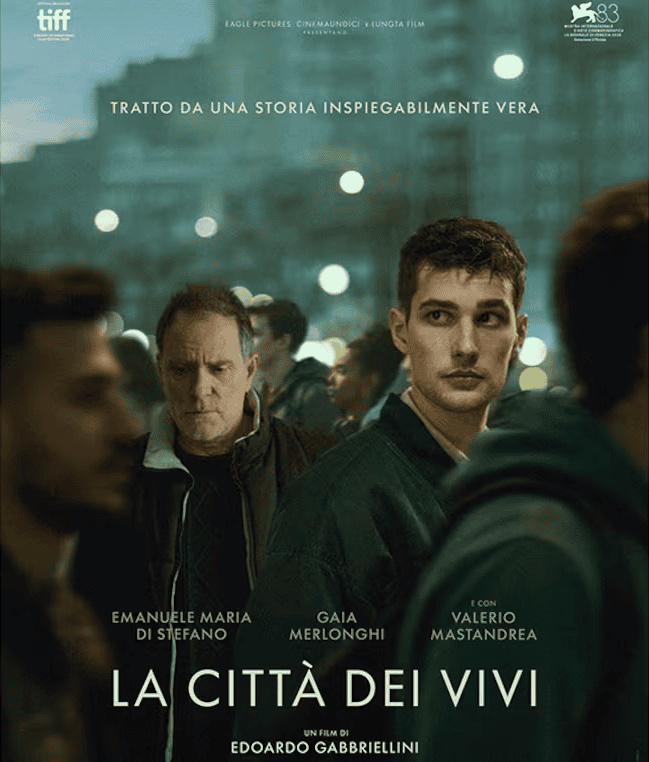
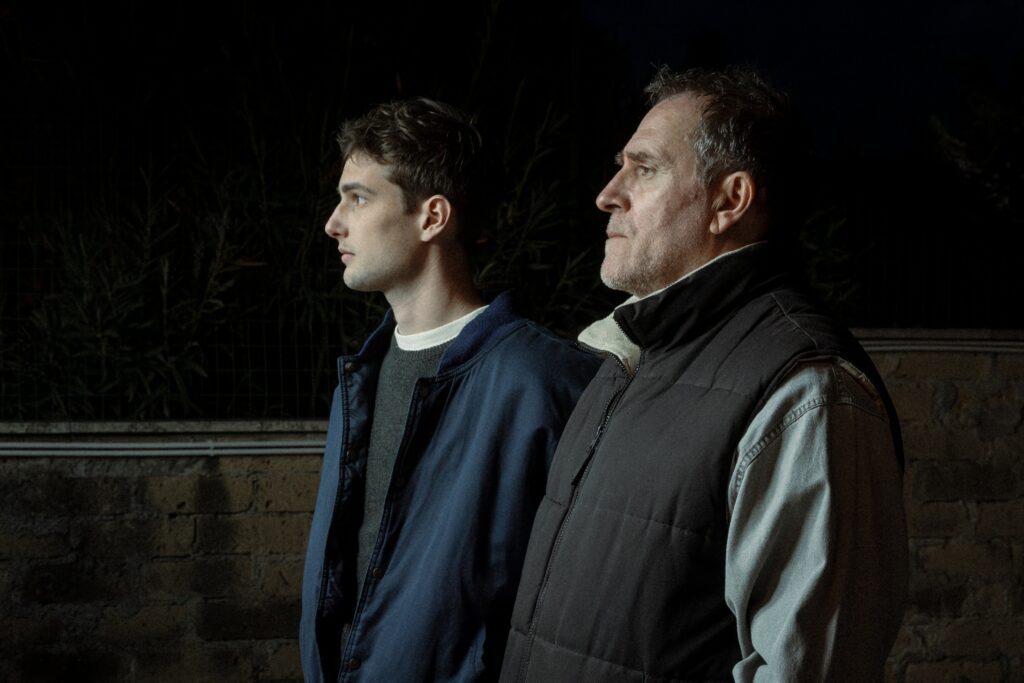
The City of the Living, dirigido por Edoardo Gabbriellini e livremente inspirado no livro de Nicola Lagioia, parte do assassinato de Luca Varani, cometido em Roma, em 2016, para reconstruir os últimos meses de um jovem que ainda procurava entender o que fazer da própria vida. O filme acompanha um rapaz querido por sua família adotiva, namorado de Marta (Gaia Merlonghi), dividido entre os amigos na periferia e a vida no centro de Roma, vivendo uma existência aparentemente comum, até que um encontro fortuito modificou a sua trajetória de maneira irreversível.
Embora baseado em um crime, a abordagem narrativa procura evitar o fascínio mórbido que acompanha histórias iguais a esta. No lugar da pornografia da dor e do câncer social sensacionalista, Gabbriellini procura construir uma narrativa íntima e existencial, à margem das páginas criminais. Durante parte dela, tive a sensação de também estar errando ao lado de Luca, tentando encontrar qual caminho seguir e aquilo em que poderia me agarrar. E por trás de um rapaz relativamente caladão e reservado, aparecem lampejos de humanidade e sensibilidade: seja quando conversa com o pai (Mastandrea) e demonstra sentir falta de ir ajudá-lo na loja de doces e brinquedos, seja nas ligações com Marta, quando uma aparente indiferença, introspecção ou timidez revela algo mais delicado sobre si.
O problema é que, embora seja sensível com a memória de Luca, The City of the Living me deixou com uma impressão de insensibilidade quando interpreta essa vida interrompida. O filme preocupa-se em manter o nome de Luca em circulação, como Marta faz durante um jantar com os pais dele, para que não desaparecesse da memória, mas sua insistência em não se aprofundar nas razões do crime transfere parte do peso moral às escolhas e curvas que Luca tomou.
Aqui sinto uma contradição entre a proposta narrativa e o resultado artístico. Se de um lado admiro a direção por não ter oferecido e discutido na forma de explicações superficiais qual o motivo para o crime, por outro essa construção fermentou algumas perguntas: e se Luca não tivesse reprovado no colégio? E se tivesse continuado estudando à noite para obter um diploma e um trabalho digno? E se não tivesse conhecido o rapaz no centro de Roma que o conduziu à prostituição masculina? E se tivesse revelado a verdade para si e àqueles que o amavam? O filme aproxima-se acidental e perigosamente de uma ideia de que a tragédia é o acúmulo das decisões tomadas por Luca que poderiam ter sido corrigidas no percurso.

Luca está aprendendo um ofício em uma oficina mecânica, mas essa aprendizagem não oferece remuneração. Ao mesmo tempo, precisa lidar com expectativas concretas sobre estudo, trabalho, autonomia e relacionamento em uma cidade igual à qualquer metrópole: uma que oferece possibilidades infinitas e nenhuma garantia de êxito. Talvez eu tivesse gostado que a narrativa fosse mais incisiva nesse ponto, embora não caiba a mim julgar esse filme hipotético: a sociedade cobra dos jovens que estudem, trabalhem, abandonem vícios e comportamentos que os coloquem em risco, construam relacionamentos estáveis, alcancem independência, mas raramente oferece as condições materiais para que atinjam as metas da sociedade capitalista. Luca erra na vida porque está desorientado com essa estrutura, que não é encarada contundentemente por Gabbriellini.
Há ainda um aspecto incômodo na representação das relações profissionais de Luca, que não é um homem gay, mas aceita participar de encontros com homens porque precisa de dinheiro. Essa situação poderia começar uma discussão mais complexa sobre sexualidade, masculinidade, trabalho sexual e sobrevivência. Em vez disso, as relações homossexuais e o consumo de drogas e álcool criam um retrato naturalmente não intencional, mas visível, de uma associação entre a homossexualidade e o crime. Existe aí um elemento amargo, um elefante no meio da sala. O problema não está em identificar onde ocorreu a violência, mas em permitir que algumas associações entre homossexualidade e prostituição criem a falsa impressão de que o crime só exista fruto desses espaços – em vez de o crime explorar a marginalidade desse espaços.
Isso não significa que o filme seja insensível. Pelo contrário: há tantos momentos delicados na relação entre Luca e seus pais, no romance com Marta e no modo como Roma aparece como uma cidade simultaneamente humilde e acolhedora, e opressiva e alienante, uma em que Luca circula incansavelmente sem praticamente sair do lugar. A sua forma naturalista e a distância relativa da câmera do personagem reforçam a sensibilidade de não transformar a narrativa em uma filial de uma produção audiovisual, em que o crime se torna um produto para consumo por uma humanidade insensível. Neste aspecto, Gabbriellini é bem eficiente em produzir uma atmosfera cotidiana e delicada de uma vida como as nossas, que seria só ordinária se não fosse o ato que a encerra.
The City of the Living mantém viva a memória de Luca Varani e evita transformar-se em um espetáculo exploratório e melodramático. A intenção da direção é nobre, mas se traduz em uma execução problemática. Sinto a dor, reconheço o retrato sensível do protagonista – e a atuação convidativa de Di Stefano – e compartilho da dificuldade de permanecer indiferente, mas senti também que o filme se aproximava demais da lógica segundo a qual bastaria que Luca tivesse estudado mais, trabalhado mais, escolhido melhor suas companhias, contado a verdade ou evitado certos ambientes para que tudo terminasse de outra maneira.
Talvez nada disso mudasse o destino dele. Talvez sim. O problema é que uma tragédia igual a essa merecia um filme que olhasse não apenas para as escolhas de Luca, mas especialmente para a sociedade que produz as expectativas que ele tenta cumprir.
THE CITY OF THE LIVING participa da 83ª Mostra Internacional de Cinema de Veneza, na seção Orizzonti.
A True Person Sensitively Portrayed in a Relatively Insensitive Film
Cinema is full of characters who stumble through life, searching for something that makes sense, a job that gives them purpose, a relationship that completes them, or simply a place where they can stand with some degree of security. As I followed the trajectory of the young Luca Varani (Di Stefano), adopted as a baby by loving parents and now, at 23, trying to find his place within Roman capitalist society, I thought of so many other characters cinema has introduced me to whose existence would otherwise go unnoticed, tiny cells within a gigantic social organism, were it not for their stories becoming public for some reason — an achievement or, more often, a tragedy.
The City of the Living, directed by Edoardo Gabbriellini and loosely inspired by Nicola Lagioia’s book, begins with the murder of Luca Varani, committed in Rome in 2016, to reconstruct the final months of a young man who was still trying to understand what to do with his life. The film follows a young man who is loved by his adoptive family, is in a relationship with Marta (Gaia Merlonghi), moves between his friends in the outskirts and life in central Rome, and lives an apparently ordinary existence until a chance encounter irreversibly changes his trajectory.
Although based on a crime, the narrative approach tries to avoid the morbid fascination that surrounds stories like this. Instead of the pornography of pain and sensationalist social pathology, Gabbriellini seeks to construct an intimate and existential narrative, on the margins of the crime pages. For part of the film, I had the feeling that I was also stumbling alongside Luca, trying to figure out which path to take and what I might hold on to. And behind a relatively quiet and reserved young man, flashes of humanity and sensitivity emerge: whether when he talks to his father (Mastandrea) and reveals that he misses helping him at the candy and toy store, or in his phone calls with Marta, when an apparent indifference, introspection, or shyness reveals something more delicate about him.
The problem is that, although The City of the Living is sensitive toward Luca’s memory, it left me with an impression of insensitivity when interpreting this interrupted life. The film is concerned with keeping Luca’s name alive, as Marta does during a dinner with his parents, so that he will not disappear from memory, but its insistence on not delving more deeply into the reasons for the crime shifts part of the moral weight toward the choices and turns Luca made along the way.
Here I sense a contradiction between the narrative proposal and the artistic result. On the one hand, I admire the director for refusing to offer or discuss, through superficial explanations, the reason for the crime. On the other, this approach gives rise to a series of questions: what if Luca had not failed at school? What if he had continued studying at night to earn a diploma and find a decent job? What if he had never met the young man in central Rome who introduced him to male prostitution? What if he had revealed the truth to himself and to those who loved him? The film accidentally and dangerously approaches the idea that tragedy is the accumulation of choices made by Luca that could have been corrected along the way.
Luca is learning a trade at an auto repair shop, but this apprenticeship offers no pay. At the same time, he must deal with concrete expectations surrounding education, work, independence, and relationships in a city like any major metropolis: one that offers endless possibilities and no guarantee of success. Perhaps I would have liked the narrative to be more incisive on this point, although it is not for me to judge this hypothetical film: society demands that young people study, work, abandon addictions and behaviors that put them at risk, build stable relationships, and achieve independence, but it rarely offers the material conditions necessary for them to meet the goals imposed by capitalist society. Luca stumbles through life because he is disoriented by this structure, which Gabbriellini does not confront with enough force.
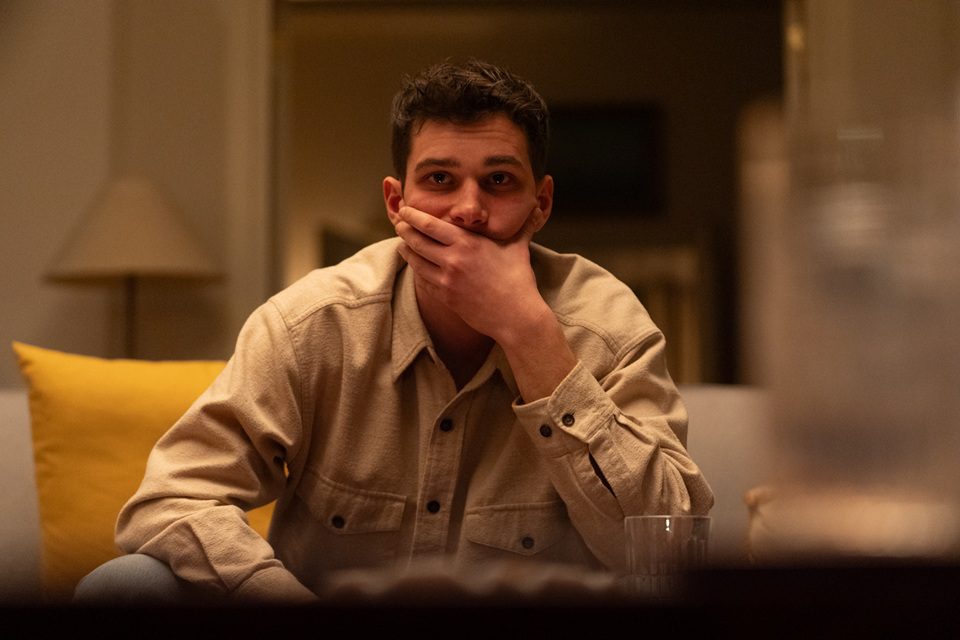
There is also an uncomfortable aspect to the representation of Luca’s professional relationships. He is not a gay man, but he agrees to engage in encounters with other men because he needs money. This could have opened up a more complex discussion about sexuality, masculinity, sex work, and survival. Instead, the homosexual relationships and the consumption of drugs and alcohol create an unintentionally natural but nevertheless visible association between homosexuality and crime. There is an uncomfortable element here, an elephant in the room. The problem is not identifying where the violence occurred, but allowing certain associations between homosexuality and prostitution to create the false impression that crime exists only as a product of these spaces, rather than recognizing how crime exploits the marginality of those spaces.
This does not mean that the film is insensitive. On the contrary: there are many delicate moments in the relationship between Luca and his parents, in his romance with Marta, and in the way Rome appears as a city that is simultaneously humble and welcoming, oppressive and alienating, one in which Luca moves incessantly without ever seeming to get anywhere. Its naturalistic approach and the camera’s relative distance from the character reinforce the sensitivity of refusing to turn the narrative into a branch office of an audiovisual industry in which crime becomes a product for consumption by an insensitive humanity. In this respect, Gabbriellini is effective at creating a delicate, everyday atmosphere around a life like ours, one that would be entirely ordinary were it not for the act that brings it to an end.
The City of the Living keeps the memory of Luca Varani alive and avoids turning itself into an exploitative or melodramatic spectacle. The directorial intention is noble, but it results in a problematic execution. I feel the pain, recognize the sensitive portrait of the protagonist — and Di Stefano’s inviting performance — and share the difficulty of remaining indifferent, but I also felt that the film came dangerously close to the idea that all Luca needed was to have studied more, worked harder, chosen his companions more carefully, told the truth, or avoided certain environments for everything to have ended differently.
Perhaps none of that would have changed his fate. Perhaps it would have. The problem is that a tragedy like this deserved a film that looked not only at Luca’s choices, but especially at the society that creates the expectations he is trying to fulfill.
THE CITY OF THE LIVING is part of the 83rd Venice International Film Festival, in the Orizzonti section.

Crítico de cinema filiado a Critics Choice Association, à Associação Brasileira de Críticos de Cinema, a Online Film Critics Society e a Fipresci. Atuou no júri da 39ª Mostra Internacional de Cinema em São Paulo/SP, do 12º Fest Aruana em João Pessoa/PB, do 24º Tallinn Black Nights Film na Estônia, do 47º TIFF – Festival Internacional de Cinema em Toronto. Ministrante do Laboratório de Crítica Cinematográfica na 1ª Mostra Internacional de Cinema em São Luís (MA) e Professor Convidado do Curso Técnico em Cinema do Instituto Estadual do Maranhão (IEMA), na disciplina Crítica Cinematográfica. Concluiu o curso de Filmmaking da New York Film Academy, no Rio de Janeiro (RJ) em 2013. Participou como co-autor dos livros 100 melhores filmes brasileiros (Letramento, 2016), Documentário brasileiro: 100 filmes essenciais (Letramento, 2017) e Animação Brasileira – 100 Filmes Essenciais (Letramento, 2018). Criou o Cinema com Crítica em fevereiro de 2010 e o Clube do Crítico em junho de 2020.