
A dificuldade de traduzir sentimentos pelo silêncio
Algumas experiências cinematográficas são sensoriais. Não me refiro à (raríssima) reação tátil que o cinema é capaz de provocar, mas a uma espécie de sensorialidade emocional produto de um encontro de elementos dentro de um espaço de encenação majoritariamente natural, pacato e sensível, o que não significa dizer que tal experiência cinematográfica seja capaz de dizer alguma coisa. É o caso deste The World Before.
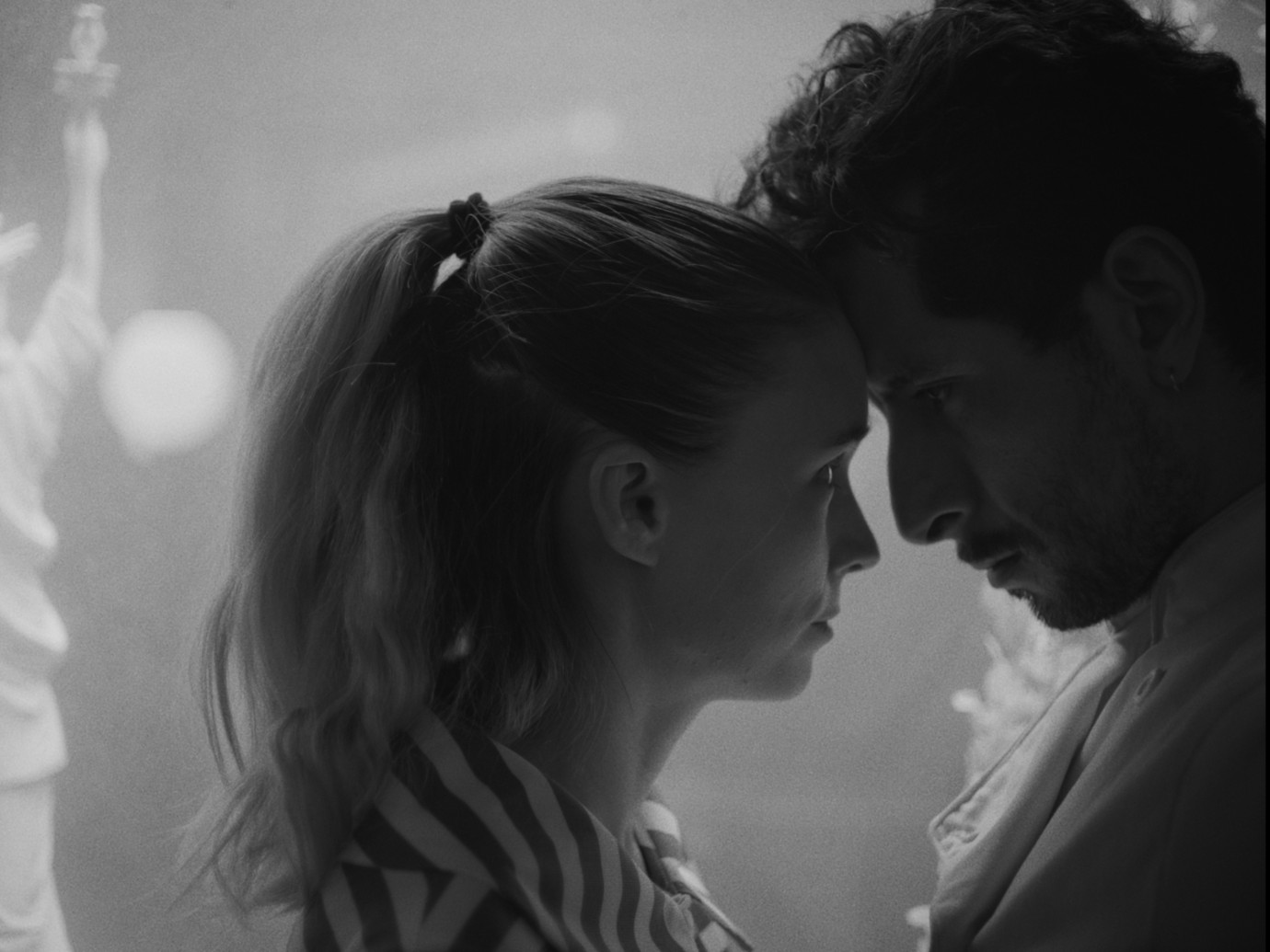
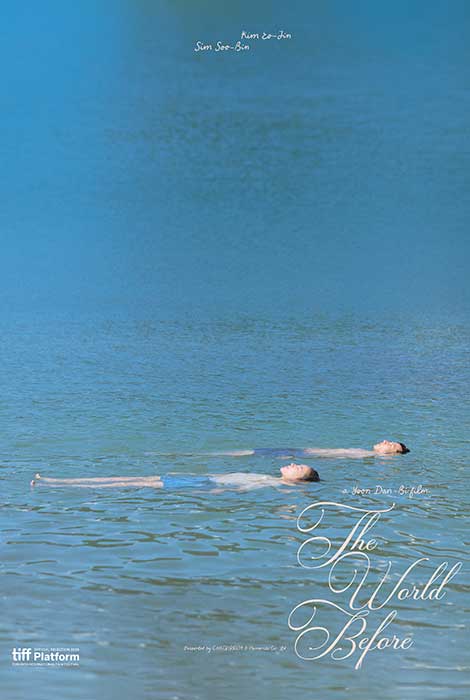
Escrito e dirigido por Yoon Dan-bi, o roteiro acompanha Jin (Sim Su-bin), uma jovem que nunca deixou a ilha onde nasceu, e Dujae (Kim Eo-jin), seu amigo de infância que retorna para o funeral da avó e permanece na casa vazia dela. Aos poucos, aquilo que seria apenas uma circunstância passageira transforma-se em uma rotina, enquanto Jin passa a enxergar de maneira diferente o lugar que acreditava conhecer e, principalmente, a si mesma.
Esses personagens atravessam jornadas bastante distintas, embora se entrecortem. Jin desejo experimentar o amor, perder a inocência, encontrar no amigo alguém com quem possa estabelecer uma relação além da companhia. Já Dujae, por outro lado, parece evitar seus apelos e suas investidas. Não necessariamente porque não gosta de Jim, o afeto dele e a sua proporção permanecem em aberto, e sim porque está atravessando um período de questionar quem é. Assim, o reencontro não produz exatamente uma jornada compartilhada, mas trajetórias que esporadicamente se tocam mas não se confundem.
Essa diferença é também uma das riquezas do filme. Dependendo do modo como o espectador se relaciona com os personagens, é possível aderir mais profundamente a um do que a outro. Jin pode parecer invasiva em determinados momentos, insistindo em uma aproximação que o outro não deseja. Dujae, por sua vez, pode ser percebido como insensível ao rejeitá-la e frustrar sentimentos que partem de um local bonito e honesto. O filme não oferece respostas simples para essas atitudes, porque seu interesse está menos em definir quem tem razão emocional do que em observar dois jovens tentando lidar com sentimentos que ainda não sabem expressar completamente, dentro de um panorama, sim, sensorial, no qual a natureza age intensamente sobre os personagens.
Contudo, a riqueza da narrativa é também a sua fragilidade. Há duas cabeças conduzindo o roteiro, cada uma delas acompanhando um personagem e guiando o espectador em uma direção diferente. E essas jornadas estão inseridas em um mesmo cenário bucólico quase idílico, que cria um contraste com a experiência de rejeição vivida pelos protagonistas. Jin é rejeitada por Dujae; e ele se sente rejeitado em outra esfera de sua vida.
Só que a narrativa é insistentemente repetitiva. Não são duas ou três cenas em que Jin avança em direção a Dujae afetiva, amorosa ou sexualmente, e é rejeitada. São muitas. E também são muitas aquelas em que Dujae permanece, aparentemente apático, olhando para o vazio interior representado pela paisagem. A repetição não funciona como estratégia narrativa, mas como repetição de camadas que já foram estabelecidas e são apenas revisitadas de ângulos diferentes.
Essa impressão é amplificada pela direção de Dan-bi. As situações desenvolvem-se de maneira naturalista, sem pressa para encerrá-las. O tempo se prolonga, as cenas dilatam-se, enquanto os personagens tentam compreender como agir diante daquele misto de rejeição e possibilidade. Parece que Dan-bi está prestes a gritar “corta”, mas tensiona o tempo e os personagens até o limite. O procedimento é coerente com a proposta de um filme interessado em capturar estados emocionais. Ao mesmo tempo, afasta o espectador do drama.
Porque, objetivamente, o drama de The World Before não é simplório. Há perda, desejo, descoberta, solidão e rejeição em uma forma até simples e eficaz. A morte da avó de Dujae provoca o reencontro. Esse reencontro desencadeia uma aproximação. Essa aproximação apresenta aos personagens desejos não correspondidos e frustrações amargas. O novelo começa a se desenrolar de forma naturalista, enquanto há uma complexidade intuída no desenvolvimento emocional de jovens adultos que ainda não desenvolveram inteiramente as ferramentas para encarar as curvas da vida.
Essa complexida está na direção de fotografia de Lee Seong-eun, em que o formato de 1.85:1 ajuda a encarar os corpos em relação aos espaços naturais, criando um atrito entre o que sentem e o idílio sereno onde estão. A minha sensação foi a de assistir os personagens esperando alguma coisa acontecer dentro delas, enquanto o verão passa e a paisagem permanece indiferente. Porém, a contemplação prolongada além do necessário criou o tédio, que, junto com a distância, tornaram difícil sentir o que uma narrativa sensorial propunha que eu sentisse.
Apesar de bem atuado, especialmente por Sim Su-bin, diante de um personagem masculino mais passivo e inerte, acaba se revelando uma experiência decepcionante. O mundo anterior ao título é esse instante em que Jin e Dujae ainda não sabem em quem se tornarão quando o verão chegar ao fim. Esse estado de suspensão é angustiante, uma pena que o filme não consiga transformá-la em uma arte tão envolvente quanto pretende.
The Difficulty of Translating Feelings Through Silence
Some cinematic experiences are sensory. I am not referring to the (very rare) tactile reaction that cinema is capable of provoking, but rather to a kind of emotional sensory quality produced by the encounter of elements within a predominantly natural, peaceful, and sensitive setting, which is not to say that such a cinematic experience is necessarily capable of saying anything. This is the case with The World Before.
Written and directed by Yoon Dan-bi, the film follows Jin (Sim Su-bin), a young woman who has never left the island where she was born, and Dujae (Kim Eo-jin), her childhood friend, who returns for his grandmother’s funeral and stays on in her empty house. Little by little, what would have been merely a temporary circumstance becomes a routine, as Jin begins to see differently the place she thought she knew and, above all, herself.
These characters go through very different journeys, even though they intersect. Jin wants to experience love, lose her innocence, and find in her friend someone with whom she can establish a relationship beyond simple companionship. Dujae, on the other hand, seems to avoid her appeals and advances. Not necessarily because he does not like Jin — his feelings for her, and their extent, remain open to interpretation — but because he is going through a period of questioning who he is. Thus, their reunion does not exactly produce a shared journey, but rather two trajectories that occasionally touch without ever becoming one.
This difference is also one of the film’s strengths. Depending on how the viewer relates to the characters, it is possible to become more deeply aligned with one than with the other. Jin can seem intrusive at certain moments, insisting on a closeness that the other does not want. Dujae, in turn, can come across as insensitive for rejecting her and frustrating feelings that come from a beautiful and honest place. The film offers no simple answers to these attitudes, because its interest lies less in determining who is emotionally right than in observing two young people trying to deal with feelings they still do not know how to fully express, within a decidedly sensory landscape in which nature exerts an intense influence on the characters.
However, the richness of the narrative is also its weakness. There are two impulses guiding the screenplay, each following one character and leading the viewer in a different direction. And these journeys unfold within the same almost idyllic, bucolic setting, creating a contrast with the experience of rejection endured by the protagonists. Jin is rejected by Dujae, while he feels rejected in another sphere of his life.
The problem is that the narrative becomes insistently repetitive. There are not two or three scenes in which Jin approaches Dujae emotionally, romantically, or sexually, only to be rejected. There are many. And there are also many in which Dujae simply remains there, apparently apathetic, staring into the emptiness represented by the landscape. The repetition does not work as a narrative strategy, but rather as a reiteration of layers that have already been established and are merely revisited from different angles.
This impression is amplified by Dan-bi’s direction. The situations unfold naturally, with no rush to bring them to an end. Time stretches, scenes expand, while the characters try to understand how to behave in the face of that mixture of rejection and possibility. It feels as though Dan-bi is about to shout “cut,” but instead she pushes time and the characters to their limits. The approach is consistent with the film’s interest in capturing emotional states. At the same time, it distances the viewer from the drama.
Because, objectively, the drama of The World Before is not simplistic. There is loss, desire, discovery, loneliness, and rejection presented in a form that is both simple and effective. Dujae’s grandmother’s death brings about their reunion. That reunion leads to a closer relationship. That closeness reveals unrequited desires and bitter frustrations. The thread begins to unravel naturally, while there is an intuitive sense of complexity in the emotional development of young adults who have not yet fully developed the tools with which to confront life’s twists and turns.
This complexity can be found in Lee Seong-eun’s cinematography, in which the 1.85:1 aspect ratio helps frame the bodies in relation to the natural spaces, creating friction between what they feel and the serene idyll surrounding them. I felt as though I were watching the characters wait for something to happen inside them while summer passes and the landscape remains indifferent. However, contemplation prolonged beyond what was necessary ultimately created boredom, which, together with the distance, made it difficult for me to feel what such a sensory narrative was asking me to feel.
Despite being well acted, especially by Sim Su-bin, opposite a male character who is more passive and inert, the film ultimately proves to be a disappointing experience. The “world before” of the title is that moment when Jin and Dujae still do not know who they will become when summer comes to an end. This state of suspension is angustiante, and it is a shame that the film cannot transform that feeling into a cinematic experience as compelling as it intends to be.

Crítico de cinema filiado a Critics Choice Association, à Associação Brasileira de Críticos de Cinema, a Online Film Critics Society e a Fipresci. Atuou no júri da 39ª Mostra Internacional de Cinema em São Paulo/SP, do 12º Fest Aruana em João Pessoa/PB, do 24º Tallinn Black Nights Film na Estônia, do 47º TIFF – Festival Internacional de Cinema em Toronto. Ministrante do Laboratório de Crítica Cinematográfica na 1ª Mostra Internacional de Cinema em São Luís (MA) e Professor Convidado do Curso Técnico em Cinema do Instituto Estadual do Maranhão (IEMA), na disciplina Crítica Cinematográfica. Concluiu o curso de Filmmaking da New York Film Academy, no Rio de Janeiro (RJ) em 2013. Participou como co-autor dos livros 100 melhores filmes brasileiros (Letramento, 2016), Documentário brasileiro: 100 filmes essenciais (Letramento, 2017) e Animação Brasileira – 100 Filmes Essenciais (Letramento, 2018). Criou o Cinema com Crítica em fevereiro de 2010 e o Clube do Crítico em junho de 2020.